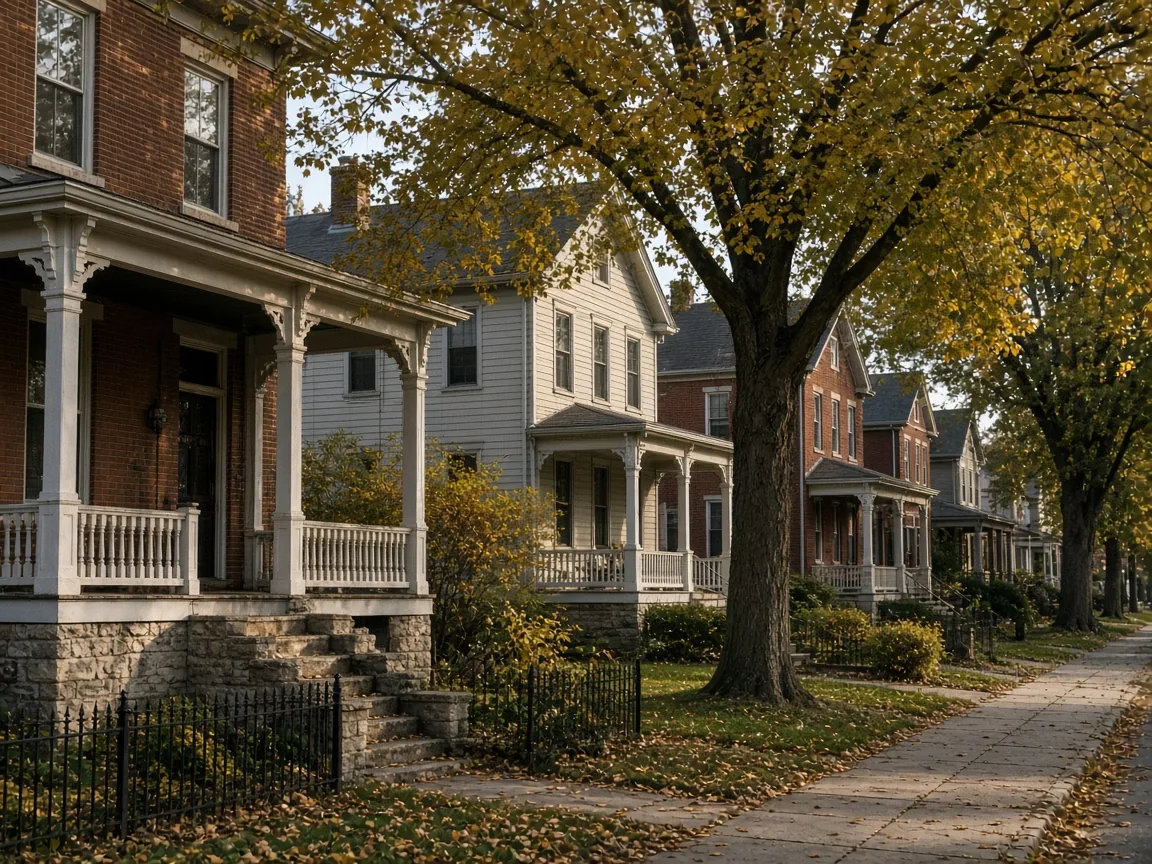
Historic stone foundation repair in Kansas City follows preservation practice: fix the water first, repoint with mortar no harder than the original, keep as much original stone as possible, and check whether the house is in a local historic district before exterior work starts.
Preservation practice is not a separate, fussier kind of repair. It is the method that makes old stone walls last, and it applies whether or not your house is on any list. What changes for a listed house is that the exterior work may need city review first.
Where Kansas City's oldest houses are, by the numbers
The U.S. Census Bureau's American Community Survey estimates that Kansas City, Missouri has 246,544 housing units, of which 49,855, about 20.2 percent, were built in 1939 or earlier. In Kansas City, Kansas, 15,681 of 63,903 units, about 24.5 percent, were built in 1939 or earlier.
That is the age group where stone foundations are found. The Census counts the age of housing, not foundation material, so these numbers do not tell you how many of those houses sit on stone.
A documented example: Old Hyde Park West
The National Register nomination for the Old Hyde Park West Historic District, prepared in 2003, gives a clear picture of one stone-foundation neighborhood. The district is in Midtown, about three miles south of downtown, roughly bounded by Linwood Boulevard, Central Street, 39th Street and Baltimore Avenue. Its period of significance runs from 1887 to 1938, and most of its buildings date from 1900 to 1909.
The form lists limestone as the foundation material, and describes limestone retaining walls one to five feet high along its streets.
The Kansas City Shirtwaist house and its stone first story
The same nomination describes the "Kansas City Shirtwaist" as a local variation of the foursquare house, with brick or stone on the first story and shingles, clapboard or stucco above. On a Shirtwaist with a stone first story, the stone runs well above grade, and the same repointing rules apply there as in the basement: soft, breathable mortar matched to the original. Exterior stone like this is also the part of the house most likely to be visible from the street, which matters for district review.
Local historic districts and exterior review in Kansas City, Missouri
The City of Kansas City, Missouri's Historic Preservation Commission reviews exterior changes to local landmarks and to properties in local historic districts. A Certificate of Appropriateness must be approved before a building permit is issued for exterior work.
The city's Historic Design Review page says review applies to properties on the Kansas City Register of Historic Places and covers exterior changes visible from the public right of way.
The city's Kansas City Register of Historic Places by Address, a list dated October 25, 2017, includes residential districts named Pendleton Heights, Scarritt Point, North Hyde Park, Old Hyde Park, Janssen Place, Roanoke, Coleman Highlands, Rockhill, Southmoreland, Union Hill and Longmeadow. That list is several years old, so check your address with the city.
The city pages we read do not say how foundation repointing is treated in review. If your house is on the register, ask the city's Historic Preservation Office before exterior work starts.
What preservation standards ask of a mason
The city's design review page says Kansas City's design guidelines are based on the Secretary of the Interior's Standards. For repointing, the National Park Service's Preservation Brief 2 sets out the practical side:
- New mortar softer and more vapor permeable than the stone, and no harder or less permeable than the original.
- Matching based on a sample of unweathered original mortar, with the sand driving color and texture.
- Hand tools for removing old mortar, because power tools in unskilled hands damage masonry edges.
- A test panel before the full job.
- Masons with at least five years of experience repointing historic masonry, which the brief suggests specifications call for.
These are reasonable things for any owner of an old stone house to ask about, listed or not. Our pages on lime mortar repointing and lime mortar vs Portland cement explain the method and the reasoning.
What we keep and what we replace
We keep sound stone and sound old mortar. Old mortar that is still holding does not need to come out just because it is old. We replace failed joints, and we replace stone only where it has split through or lost so much of its face that it can no longer do its job. When stone does need replacing, we look for stone of similar character. For more on limestone specifically, see limestone foundation repair.
Historic stone foundation questions
Do I need city approval to repoint a foundation in a historic district?
The city's pages say exterior changes to properties in local historic districts are reviewed, and that a Certificate of Appropriateness must be approved before a building permit is issued for exterior work. They do not say how repointing is handled. Ask the city's Historic Preservation Office before exterior work begins.
Is interior basement work reviewed?
The city's Historic Design Review page says review covers exterior changes visible from the public right of way.
Is my house in a local historic district?
The city's register list includes the districts named above. The list we read is from 2017, so check your address with the city. If you are buying, our guide on buying a house with a stone foundation covers this as part of due diligence.
Can old cement patches be removed from historic stone?
Yes, with care. Preservation Brief 2 calls hand chisels the least damaging removal method and warns that grinders can damage masonry edges. Slow, careful work is the price of keeping the stone. We work across the Kansas City metro; see our service area.
Sources
- U.S. Census Bureau, American Community Survey 2024 1-year, table B25034, via Census Reporter, Kansas City, Missouri and Kansas City, Kansas
- Missouri State Historic Preservation Office, National Register nomination, Old Hyde Park West Historic District (2003)
- City of Kansas City, Missouri, Historic Preservation Commission
- City of Kansas City, Missouri, Historic Design Review
- City of Kansas City, Missouri, Kansas City Register of Historic Places by Address (2017)
- National Park Service, Preservation Brief 2: Repointing Mortar Joints in Historic Masonry Buildings (1998)
Get a historic stone foundation quote
Tell us whether the house is in a local district, and send photos of the walls and joints. Ask for a historic stone foundation repair quote.