In a stone wall, the mortar joints are the part meant to wear out. The National Park Service's guidance on repointing historic masonry, Preservation Brief 2, says new mortar should be softer than the masonry units and more vapor permeable than them, and no harder or less permeable than the original mortar.

Stone foundation repair in Kansas City
(Kansas City)↓
We repair stone and limestone foundations in Kansas City: repointing washed-out joints with a compatible lime mortar, resetting loose stone, drying out damp walls, and telling you plainly when a moving wall needs bracing instead of more mortar.
A stone foundation is not a poured concrete wall with a different look. It is many separate stones held together by mortar joints, and it behaves like one. That changes what a good repair looks like, what a bad repair costs you later, and which problems are routine upkeep rather than an emergency. This page explains how we approach stone work and points you to the page for the problem you are seeing.
How old Kansas City's stone-era housing is
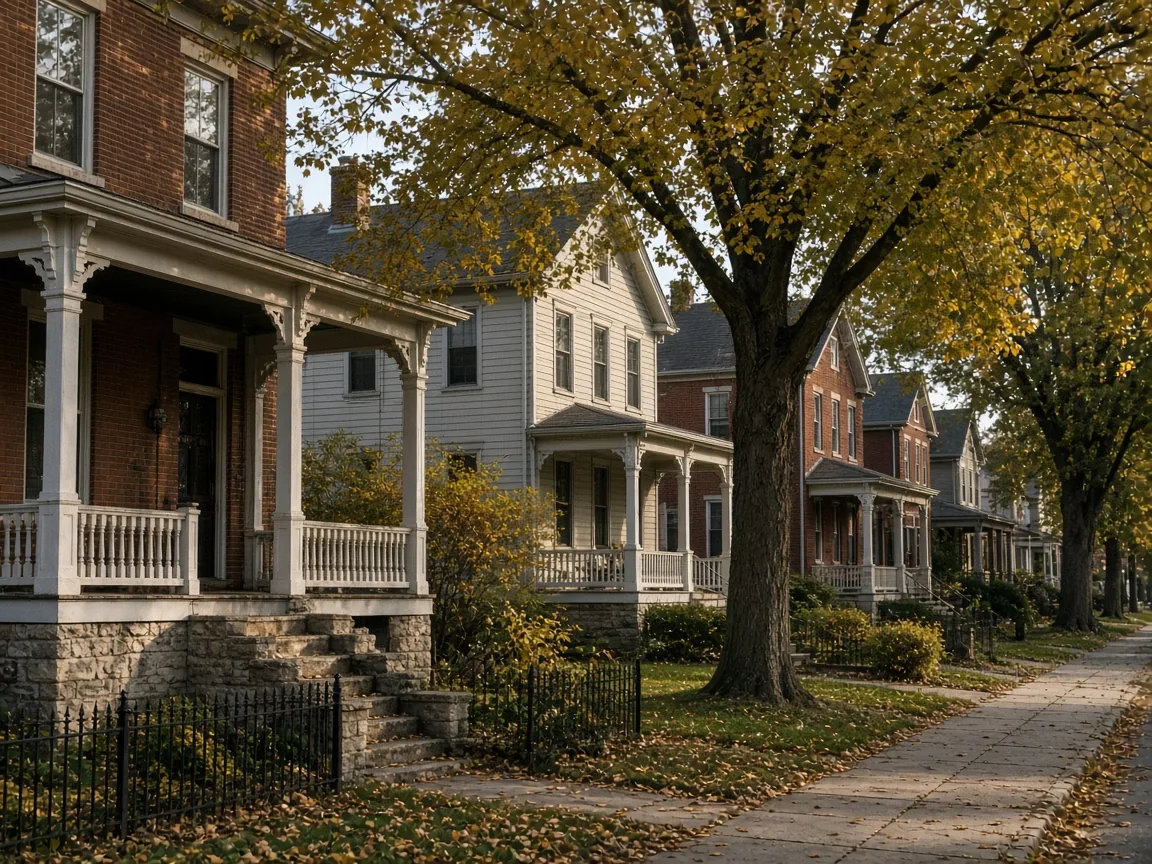
Kansas City has a large stock of houses built before the Second World War, which is the age group where stone foundations are found. The U.S. Census Bureau's American Community Survey estimates that Kansas City, Missouri has 246,544 housing units, and 49,855 of them, about 20.2 percent, were built in 1939 or earlier. Another 14,092 were built in the 1940s. In Kansas City, Kansas, 15,681 of 63,903 housing units, about 24.5 percent, were built in 1939 or earlier.
Those figures count when houses were built, not what they sit on. The Census does not record foundation material, so the numbers tell you how much older housing there is, not how many stone foundations there are.
For a documented example, the National Register nomination for the Old Hyde Park West Historic District in Midtown lists limestone as the foundation material, and most of its buildings date from 1900 to 1909.
Find the right repair by what you see in the basement
Start with the symptom. Each item below links to the page that covers it in depth.
- 01
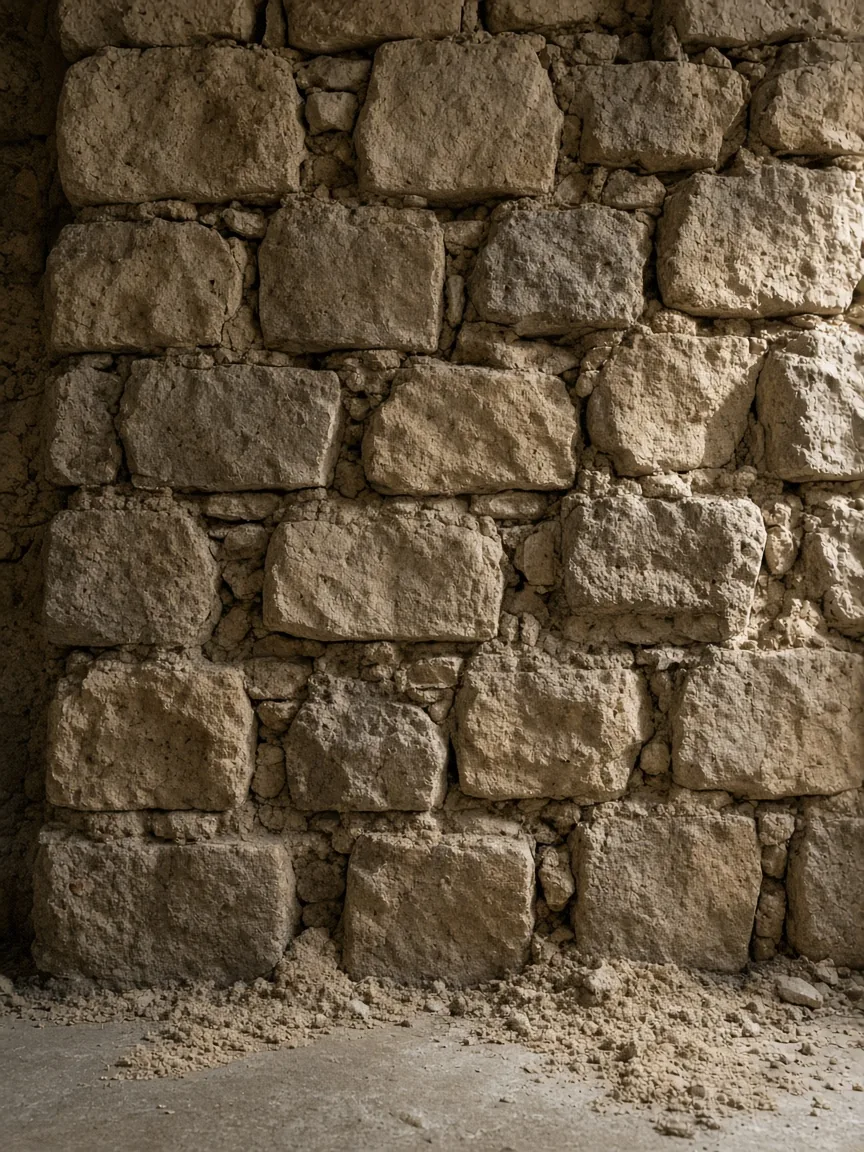
Sand or grit at the base of the wall, or joints sunk back behind the stone face.
The mortar is leaving the joints. See lime mortar repointing and tuckpointing.
- 02
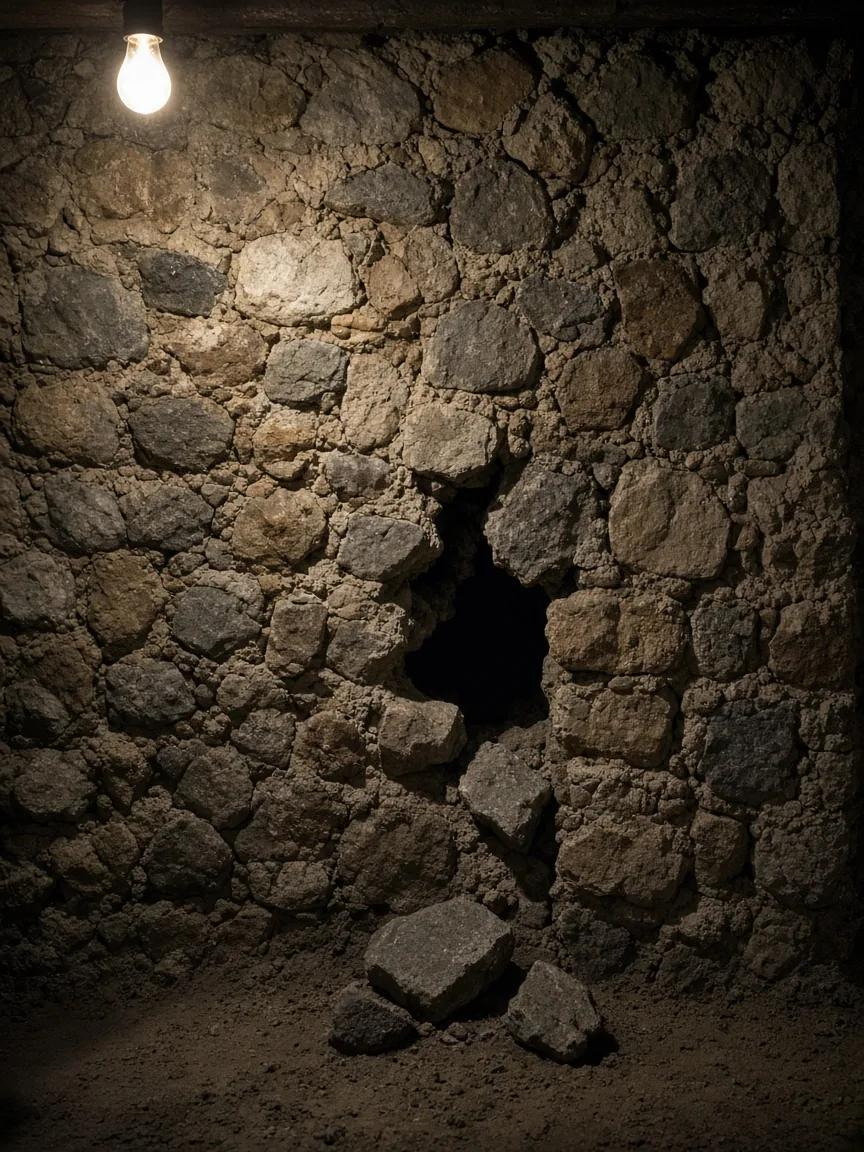
A stone that is loose, has dropped, or has fallen out.
- 03
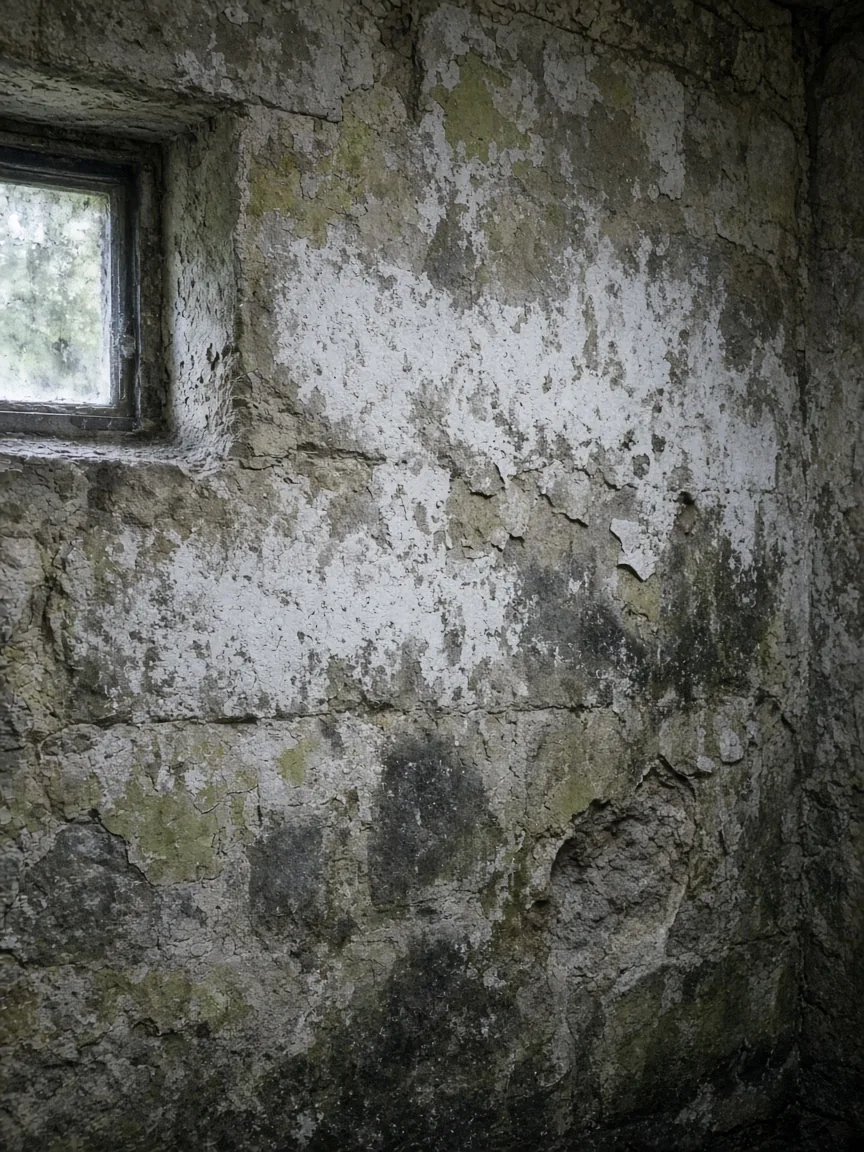
White crust, damp patches, or flaking stone.
Water is moving through the wall. See moisture in stone foundations.
- 05
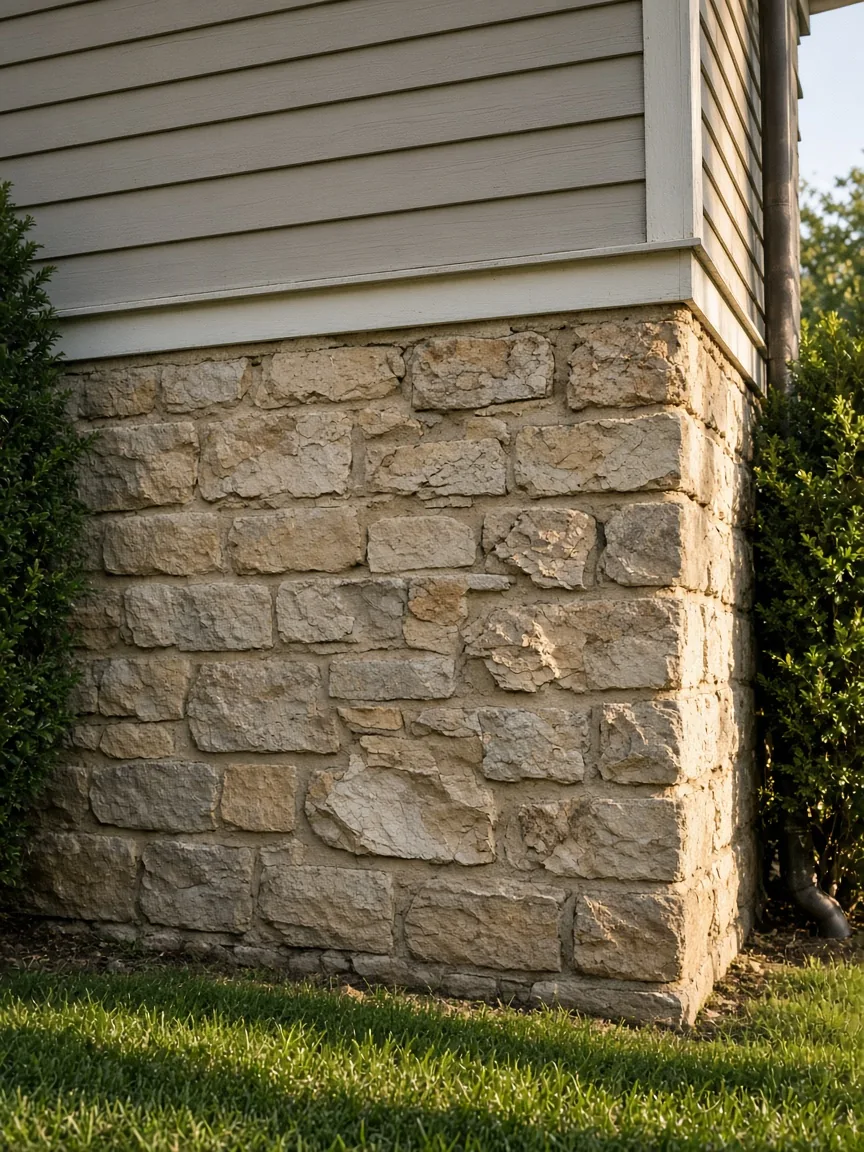
A wall of squared, cut limestone with faces that are spalling or splitting.
Why a stone wall is repaired differently from poured concrete
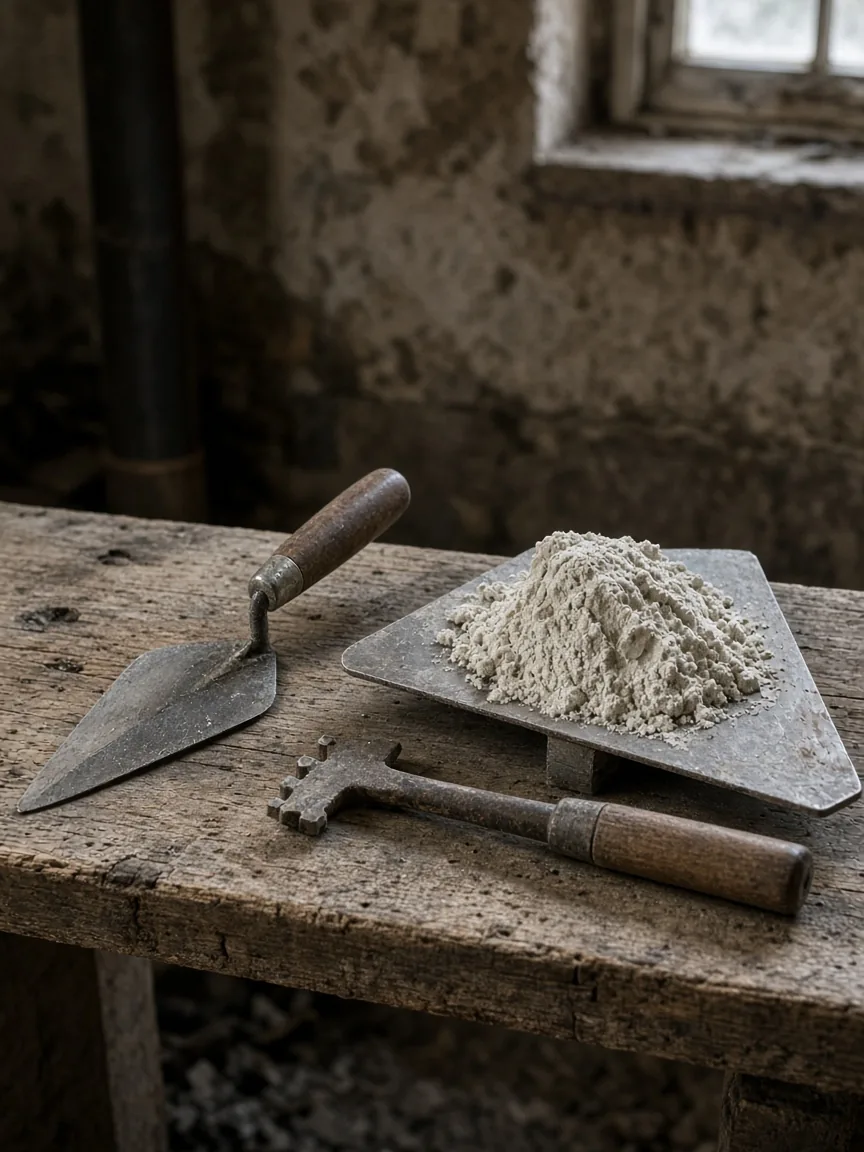
The reason is simple once you see it. When mortar is softer than the stone, stress and moisture work their way out through the joints, and the joints are what you renew every few decades. When the mortar is harder than the stone, the stone takes the stress instead, and the brief describes the result as cracking and spalling of the masonry. A stone can be replaced, but it is far more work than raking and refilling a joint.
That is why we use lime-based mortar matched to what is already in the wall, and why we remove hard cement patches from earlier repairs when they are damaging the stone around them.
Water comes first on every stone job
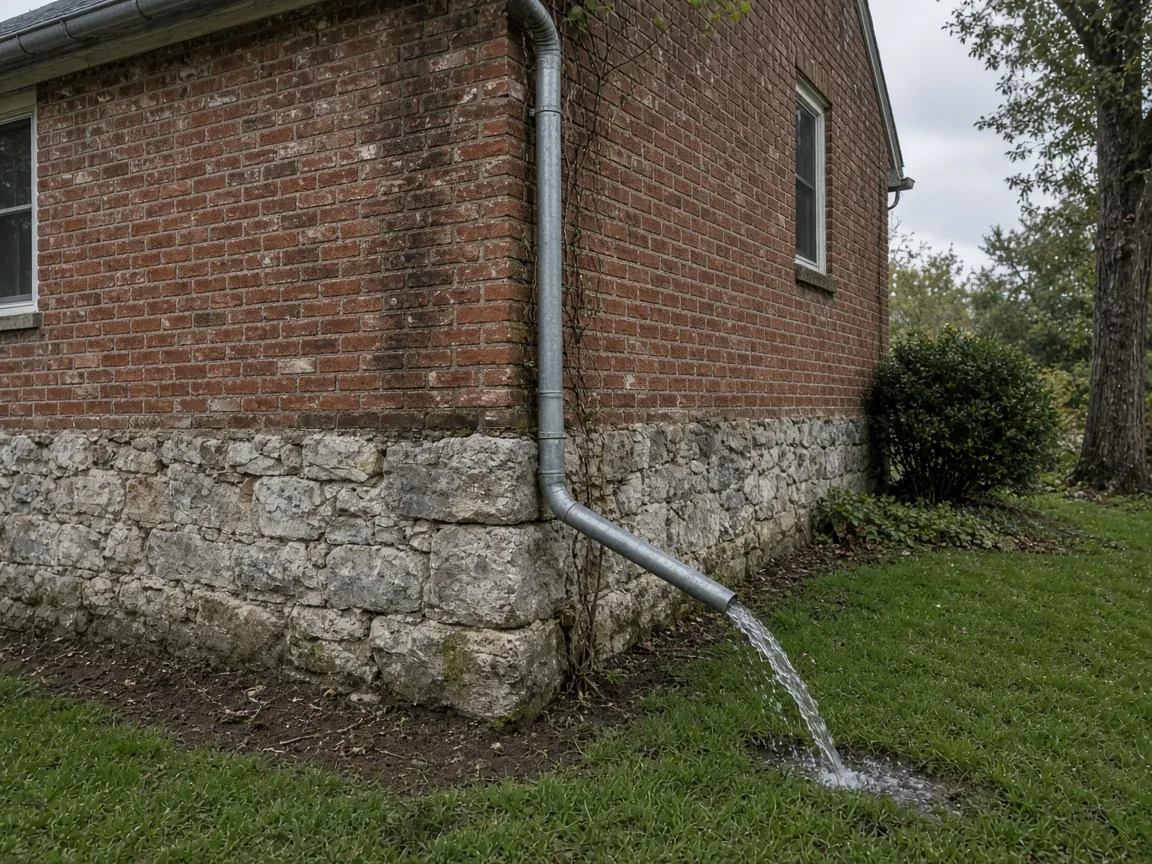
Water is the first thing we look for on a damaged stone wall, because repointing a wall that is still being soaked only buys a few years. The Park Service's moisture guidance, Preservation Brief 39, puts the order of work plainly: slope the grade away from the foundation, carry downspout water well away from the house, and add surface drainage where there is none. Excavation, coatings and footing drains come after those steps. The same brief notes that a rain of 2 inches in an hour can send about 200 gallons through a single downspout in that hour.
Local soil adds pressure. K-State Research and Extension in Johnson County describes area soils as very high in clay, which swells when wet and shrinks when dry, and says that pressure can crack foundations and basement walls.
So every quote we write looks at the gutters, downspouts and grade on the side of the house where the wall is failing. Sometimes that outside work is most of the fix.
Kansas CityStone foundations
01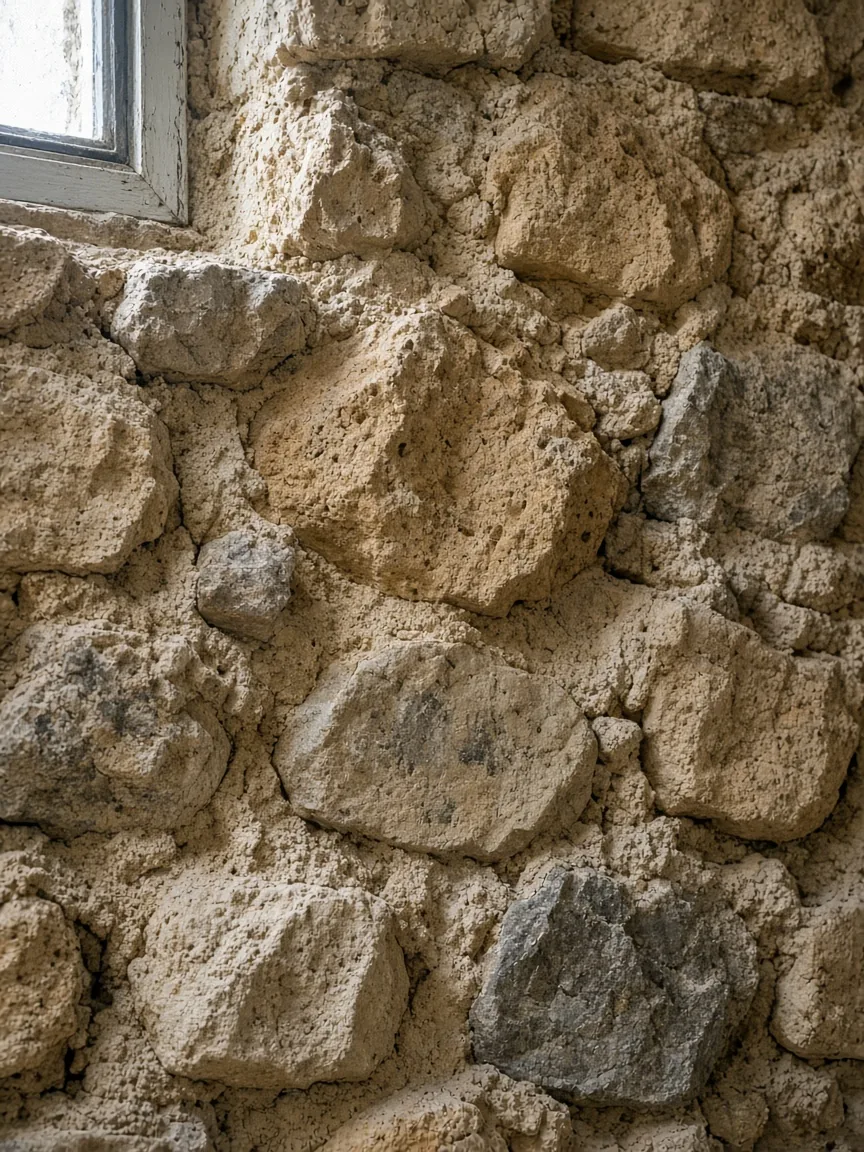
When more mortar is the wrong answer
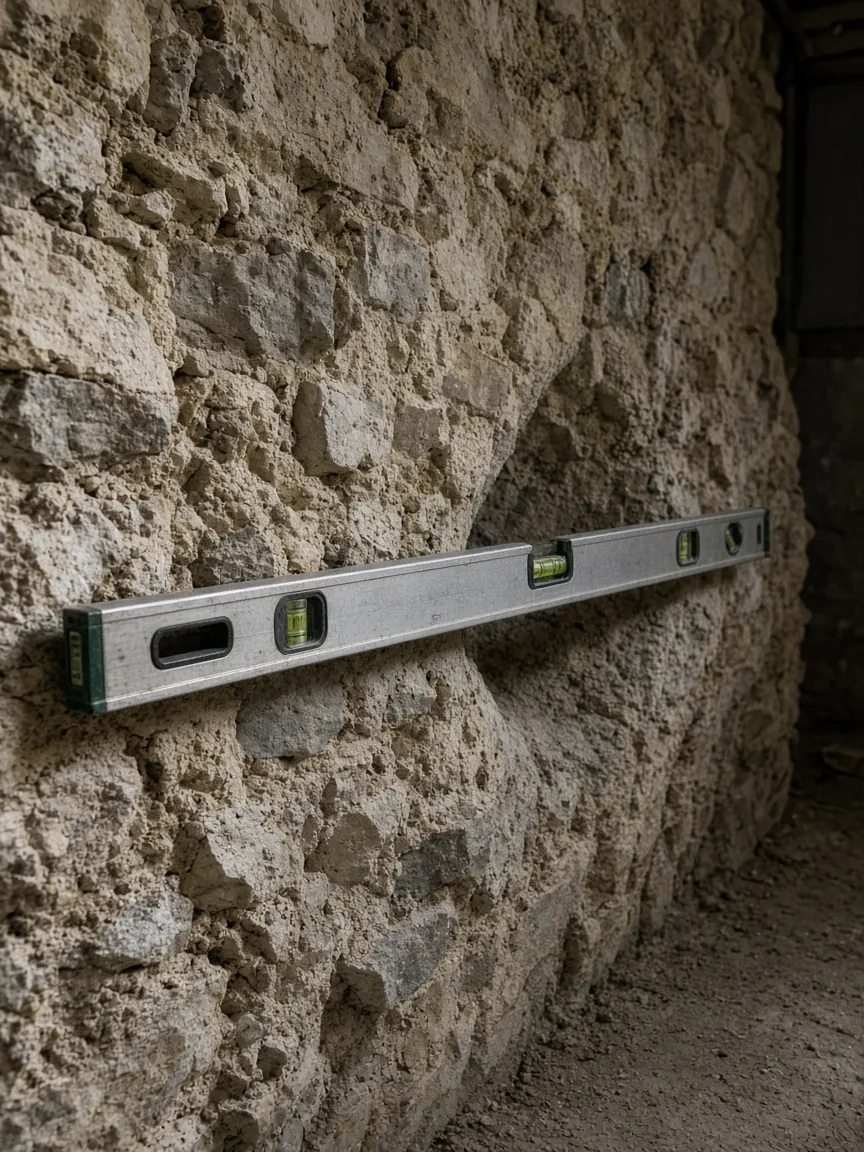
Mortar fills joints. It does not hold back a wall that is still moving. If a section of wall leans, bellies or has stones pushed out of line, we measure it over time before deciding what it needs. A stable, shallow belly can often be repointed once the water is handled. A wall that is still moving needs to be braced, reset or rebuilt, and we will tell you that rather than sell you a repointing job that will crack again. The bowing limestone walls page explains how we make that call.
02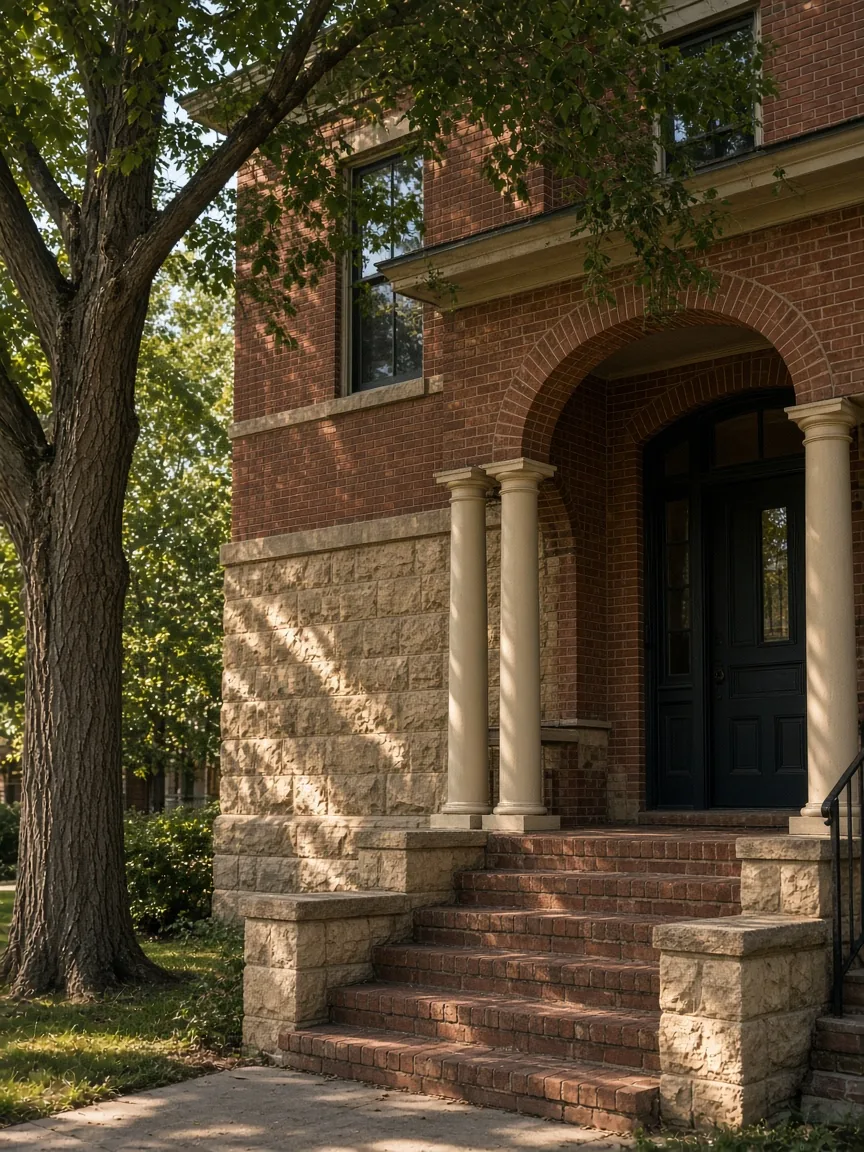
Historic houses and local district review
The City of Kansas City, Missouri's Historic Preservation Commission reviews exterior changes to local landmarks and properties in local historic districts, and a Certificate of Appropriateness must be approved before a building permit is issued for exterior work. If your house is in a local district, read our page on historic stone foundations before exterior work starts.
03
What stone foundation repair costs
Stone repair is priced by the wall: how many feet of joint need raking and refilling, how deep the joints are, how many stones need resetting or replacing, whether water work comes first, and whether any part of the wall is moving. Published cost guides for Kansas City cover foundation repair in general and do not price stone work directly. Our stone foundation repair cost page shows the published Kansas City ranges, explains why none of them is a stone price, and lists what moves a stone repair quote up or down.
(Kansas City)
Where we work in the Kansas City metro
We repair stone foundations on both sides of the state line, wherever an older house sits on limestone or rubble. See our service area for details, read our guides for owners and buyers, or browse the FAQ.
Stone foundation repair questions
Is sand on the basement floor a foundation problem?
Sand or grit along the base of a stone wall is mortar leaving the joints. It is the sign that the wall is due for repointing. It is not an emergency by itself, but joints that keep emptying let stones loosen and let water in, so it is worth having the wall looked at. Our repointing page explains the repair.
How long does a stone foundation last?
The stone itself is not the part that wears out first. The mortar is, and it is designed to be renewed. Preservation Brief 2 says a good repointing job should last at least 30 years and preferably 50 to 100 years. A stone wall whose joints are kept up and whose water is managed can keep doing its job for a long time.
Do you repair brick foundations too?
Yes, where the brick sits on or beside stone and takes the same lime mortar approach. Older brick is often softer than modern brick, so the same rule applies: the mortar should be softer than the masonry.
What should I send for a quote?
A wide photo of each wall that has a problem, close photos of the joints, a photo of any bulge with a straightedge held against it, and a photo of the outside grade and downspouts on that side of the house. Send them through our quote page.
Sources
- U.S. Census Bureau, American Community Survey 2024 1-year, table B25034, via Census Reporter, Kansas City, Missouri and Kansas City, Kansas
- Missouri State Historic Preservation Office, National Register nomination, Old Hyde Park West Historic District (2003)
- National Park Service, Preservation Brief 2: Repointing Mortar Joints in Historic Masonry Buildings (1998)
- National Park Service, Preservation Brief 39: Controlling Unwanted Moisture in Historic Buildings (1996)
- K-State Research and Extension, Johnson County, Clay Soil: It shrinks and swells
- City of Kansas City, Missouri, Historic Preservation Commission
Get a written stone foundation repair quote
Send photos of the wall and a few details, and we will write up what the wall needs, in the order it should be done. Ask for a stone foundation repair quote.