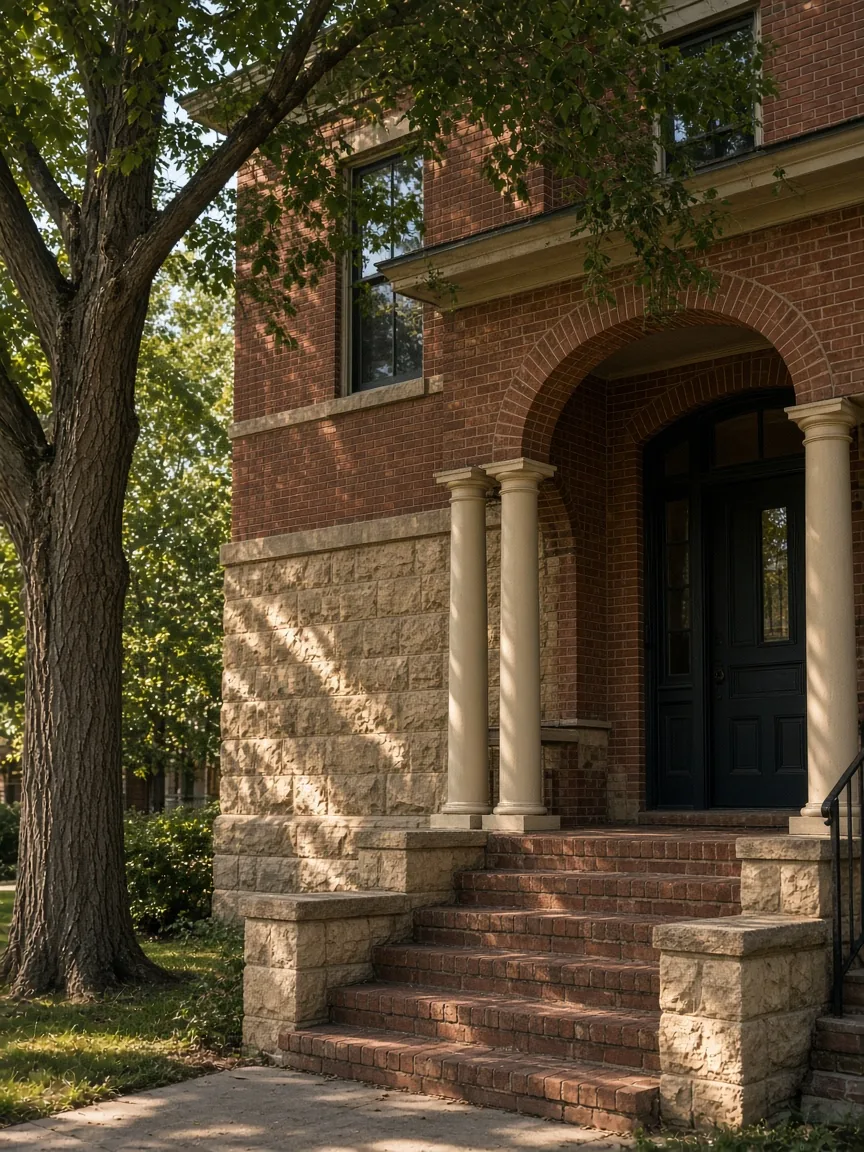
Buying a house with a stone foundation in Kansas City does not have to be a deal breaker: look for missing mortar, damp or flaking stone, hard cement patches and any wall that leans or bulges, and get the repair scoped before you close.
The short answer
Stone foundations are an older way of building, not a defect. Their upkeep is different from a poured wall's. The questions that matter are whether the joints are holding, whether water is being managed, whether earlier repairs did harm, and whether any wall is moving. The first three can be planned and priced as repairs. The last one is the one to have assessed before you sign.
How much of Kansas City's housing is this old
The U.S. Census Bureau's American Community Survey estimates that 49,855 of Kansas City, Missouri's 246,544 housing units, about 20.2 percent, were built in 1939 or earlier. In Kansas City, Kansas, the figure is 15,681 of 63,903 units, about 24.5 percent. That is the age group where stone foundations are found. The Census counts when houses were built, not what they stand on, so it cannot tell you how many sit on stone.
A basement walk-through you can do at a showing
Bring a flashlight, a phone camera, and a straightedge or a length of string.
- Joints. Are they full, or recessed behind the stone face? Can you rake grit out with a fingernail?
- Loose stone. Do any stones move when pressed? Are any missing?
- Grit on the floor. Sand along the base of a wall means mortar is leaving the joints.
- White tide lines. The National Park Service's moisture guidance, Preservation Brief 39, describes efflorescence as a whitish stain or tide line, often 1 to 3 feet above grade, where moisture evaporates and leaves salts. It shows water is moving through the wall.
- Cement patches. Hard gray patches surrounded by flaking stone are a sign of past repairs that have done harm. See lime mortar vs Portland cement.
- Straightness. Hold a straightedge or stretched string against each wall. Note any belly or lean.
- The sill. Look at where the wooden framing sits on top of the wall. Gaps or crushed wood are worth photographing.
- Fresh paint or coatings. A freshly painted or coated stone wall can hide what is underneath.
- Outside. Walk the outside. Where do the downspouts empty? Does the ground slope away from the house? Preservation Brief 39's target is roughly 6 inches of fall in the first 10 feet.
Routine upkeep, a negotiating item, or a stop sign
Routine upkeep. Some recessed joints, a little grit, gutters that need cleaning, downspouts that need extending. These are normal for an old stone house. Budget for repointing and gutter work in the years ahead.
A negotiating item. Damp walls with tide lines, sections of joints that have emptied, loose stones, hard cement patches causing damage, or a grade sloping toward the house. These are real repairs that can be scoped and priced. See moisture in stone foundations.
A stop sign until assessed. A wall that leans or bulges, stones pushed out of line, or a gap opening at the sill. These are the items to have looked at before closing, because the repair depends on whether the wall is still moving. See bowing limestone walls.
What a home inspector covers and who to ask next
The U.S. Department of Housing and Urban Development's Residential Rehabilitation Inspection Guide says masonry foundation walls should be inspected for cracking, deterioration, moisture penetration and structural adequacy, and lists basement checks including dampness, water stains, efflorescence, roof drainage, grading and window wells. A general home inspection will flag concerns along those lines.
For the next step, match the specialist to the problem. Joint loss, loose stone, damp walls and bad patches are masonry repairs, and a stone foundation contractor can scope them. A wall that appears to be moving calls for a structural engineer's assessment. We repair stone foundations; we do not write engineer reports.
Check for local historic designation
If the house is in Kansas City, Missouri, check whether it is on the city's historic register. The city's Historic Preservation Commission reviews exterior changes to local landmarks and properties in local historic districts, and a Certificate of Appropriateness must be approved before a building permit is issued for exterior work. The city's Historic Design Review page says review covers exterior changes visible from the public right of way. Our page on historic stone foundations covers this in more detail.
Your first year in the house
- Clean the gutters at least twice a year, as Preservation Brief 39 recommends, and keep downspouts carrying water well away from the walls.
- Fix any grade that slopes toward the house.
- Watch the walls through all four seasons. Preservation Brief 39 notes that diagnosing moisture can take up to four seasons, and a wall can behave differently in a wet spring than in a dry fall. Take dated photos.
- In a drought, K-State Research and Extension in Johnson County recommends watering the soil a foot or two out from the house, because local clay shrinks and cracks when dry. It also warns against packing extra soil into those cracks beside the foundation.
Stone foundation buyer questions
Is it worth buying a house with foundation issues?
It depends on which issue. Joint loss and gutter problems are routine upkeep. Damp walls, loose stone and bad patches are repairs you can price and negotiate. A wall that is moving needs an assessment before closing.
What are the common problems with stone foundations?
Mortar loss from the joints (repointing), moisture coming through the wall (moisture), hard cement patches damaging the stone (lime vs Portland), and walls that lean or bulge (bowing walls).
Can I get a repair quote before closing?
Yes, with the seller's permission to access the basement. Send photos through our quote page. For what affects the price, see stone foundation repair cost. More guides are on our guides page.
Sources
- U.S. Census Bureau, American Community Survey 2024 1-year, table B25034, via Census Reporter, Kansas City, Missouri and Kansas City, Kansas
- National Park Service, Preservation Brief 39: Controlling Unwanted Moisture in Historic Buildings (1996)
- U.S. Department of Housing and Urban Development, Residential Rehabilitation Inspection Guide (2000)
- City of Kansas City, Missouri, Historic Preservation Commission
- City of Kansas City, Missouri, Historic Design Review
- K-State Research and Extension, Johnson County, Clay Soil: It shrinks and swells
Get a quote before you close
Send photos from the showing and we will tell you what the walls need. Ask for a stone foundation repair quote.